
Complete Building Guide
Everything you need to know before starting your first hockey stick build — from safety and stick anatomy to cutting composites, fastening techniques, and clock movements. This guide covers both wood and composite sticks, with an emphasis on modern composite construction.
Philosophy
"The designs on this website won't use any primary building materials besides hockey sticks and pucks... No plywood, no pine, no cheating."
Every project on this site is built using hockey sticks as the primary structural material. The goal is to create real, functional furniture and clocks entirely from sticks and pucks — not to use them as decoration on top of conventional materials. This constraint is what makes each piece unique and challenging to build.
Safety
Working with hockey sticks — especially composites — involves power tools and hazardous dust. Always follow equipment operation instructions and wear proper PPE:
- Respirator / dust mask — essential for composites. Carbon fiber dust is hazardous to breathe. Also required when routing vulcanized rubber pucks.
- Safety goggles — flying debris from cuts and carbon fiber particles
- Gloves — for handling cut sticks (sharp edges, especially composites)
- Long sleeves — carbon fiber splinters are extremely fine and irritating to skin
- Ear plugs — power tools are loud
Composite sticks produce fine carbon fiber dust when cut or drilled. Always work outdoors or in a space with strong ventilation. A shop vacuum with a HEPA filter at the cut point helps significantly.
Stick Specifications
Composite Sticks (Modern)
Composite sticks are made of layered carbon fiber wrapped around a hollow or foam core. When cut, you'll see distinct layers. The key difference from wood: composites are hollow in the shaft area, which affects how you measure, cut, and fasten pieces.
Composite sticks taper along their length, so widths vary depending on where you measure. This is critical for planning cuts and ensuring consistent dimensions across your build.
Wood Sticks (Traditional)
Senior wooden hockey sticks have fairly consistent dimensions:
| Dimension | Measurement |
|---|---|
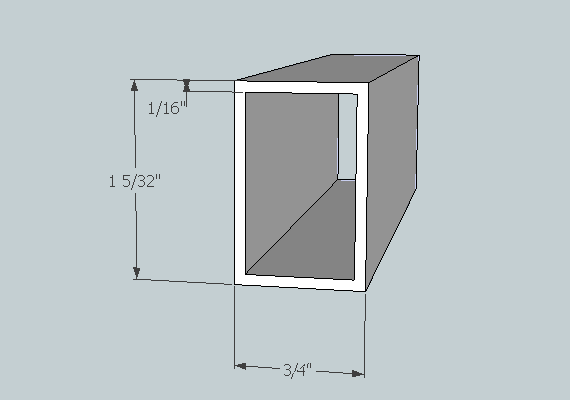
| Width | 1 5/32″ |
| Height | 3/4″ |
| Max length (shaft) | ~55″ |
Stick materials: composite (carbon fiber), wood, wood with fiberglass coatings, aluminum.
Sizes: youth, intermediate, junior, senior. The projects on this site use senior sticks.
Wood stick cross-section diagram — image pending migration
Dimensions vary slightly from stick to stick. The author doesn't traditionally use stick blades in builds — only the shaft portion.
Measuring & Marking
Accurate measurement is critical, especially with composites. Because composite sticks taper along their length, measurements must be taken at specific points — two sticks may have different widths at the same distance from the butt end.
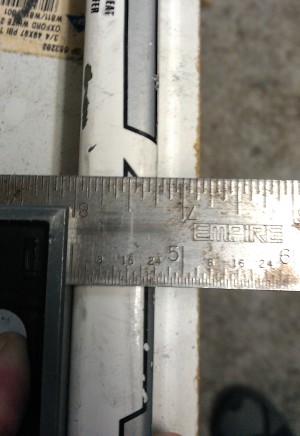
Main shaft measurement
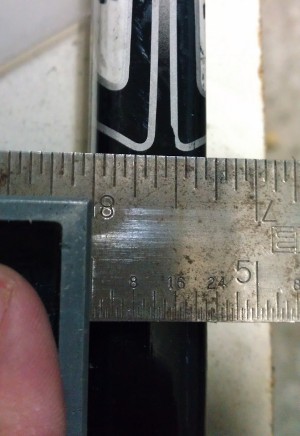
Tapered shaft measurement
Always measure and mark where you'll cut before committing. Account for blade width in your measurements.
Wood sticks are more uniform, but still measure each one — slight variation is normal. Use a template stick (one cut to size) as a reference for all remaining cuts of the same length.
Cutting Techniques
Blade Selection for Composites
A standard wood blade will dull quickly on composites and produce excessive dust. Use a masonry or diamond blade for cleaner cuts with less dust.
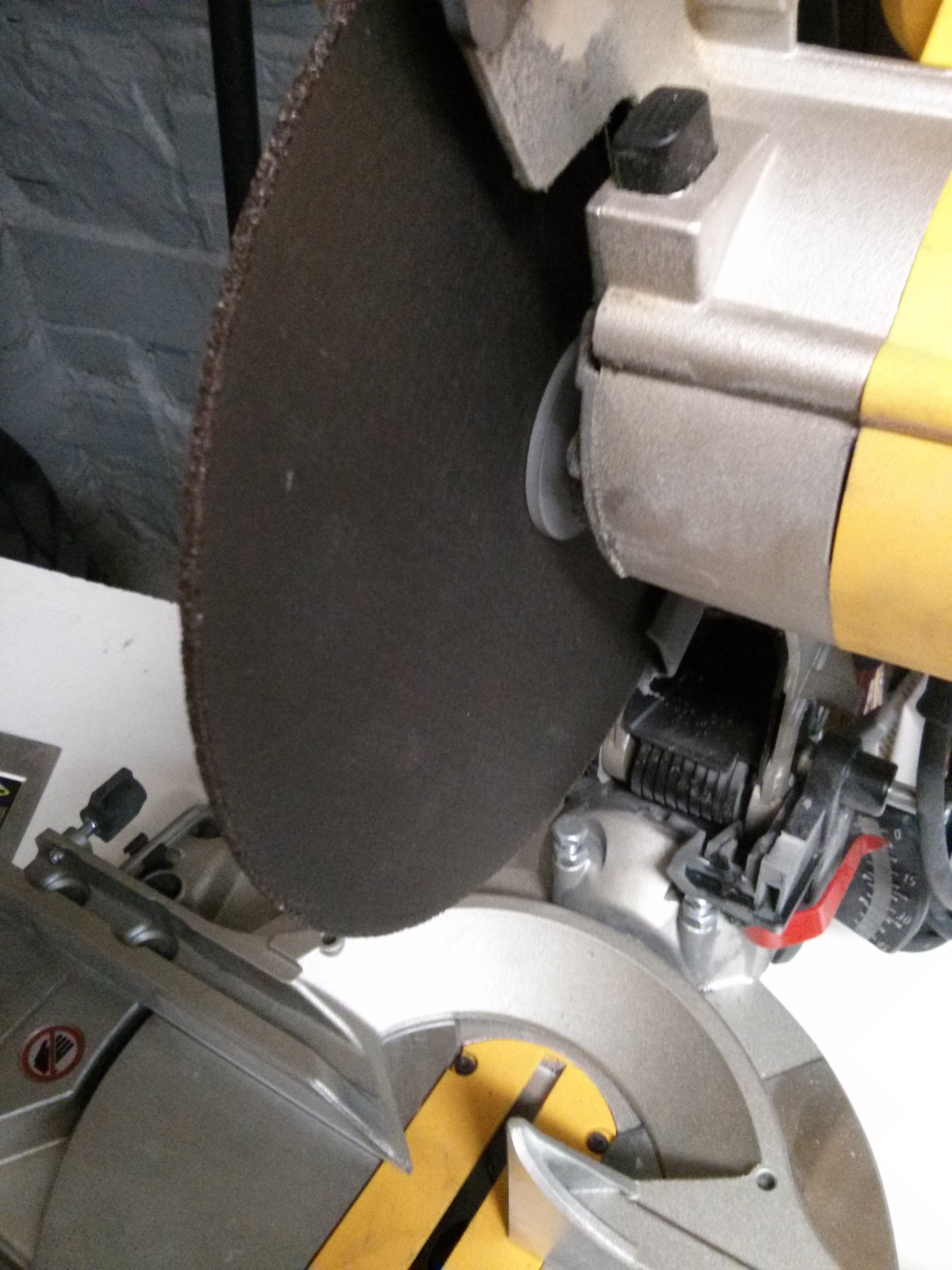
Masonry blade for composites
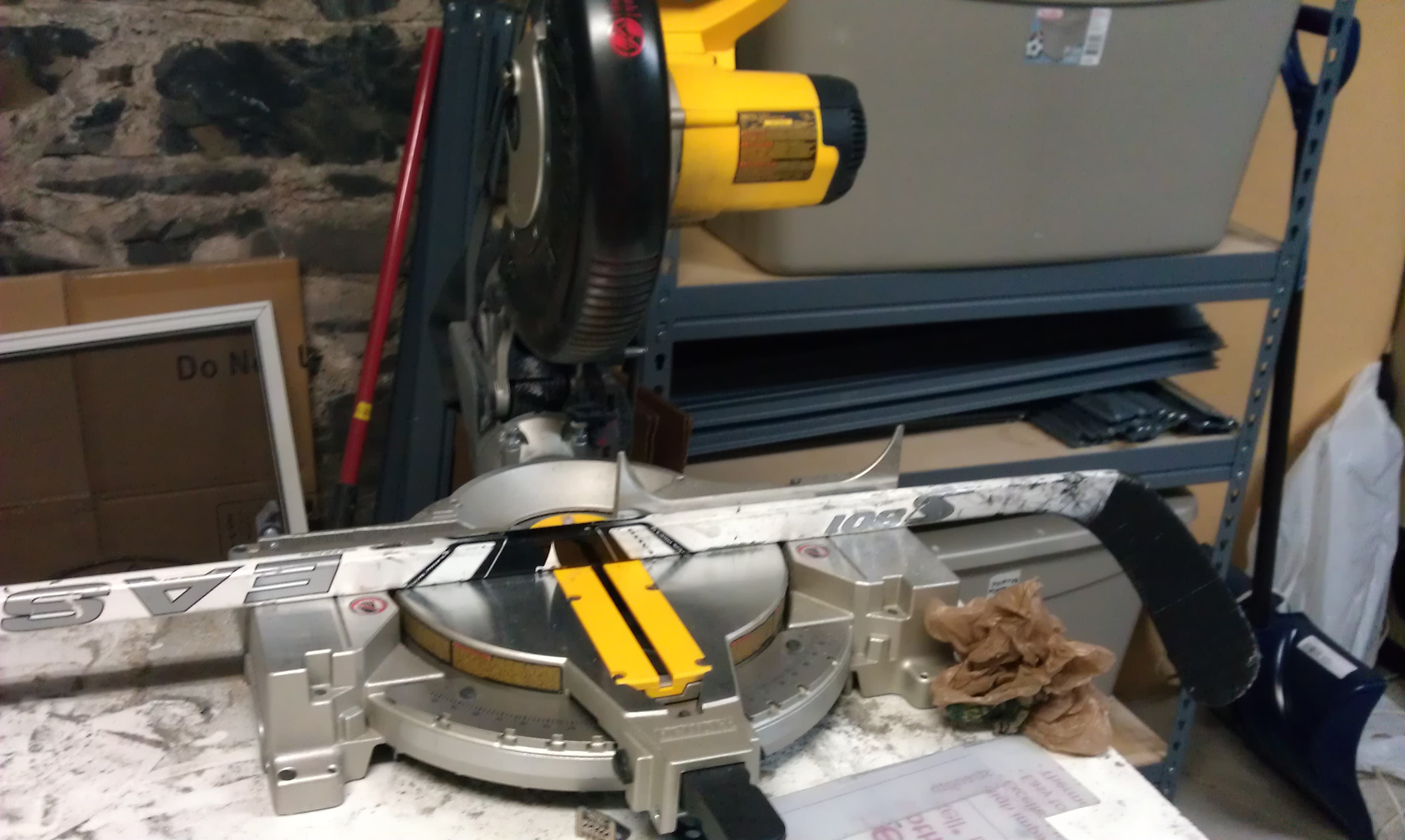
Single stick on mitre saw
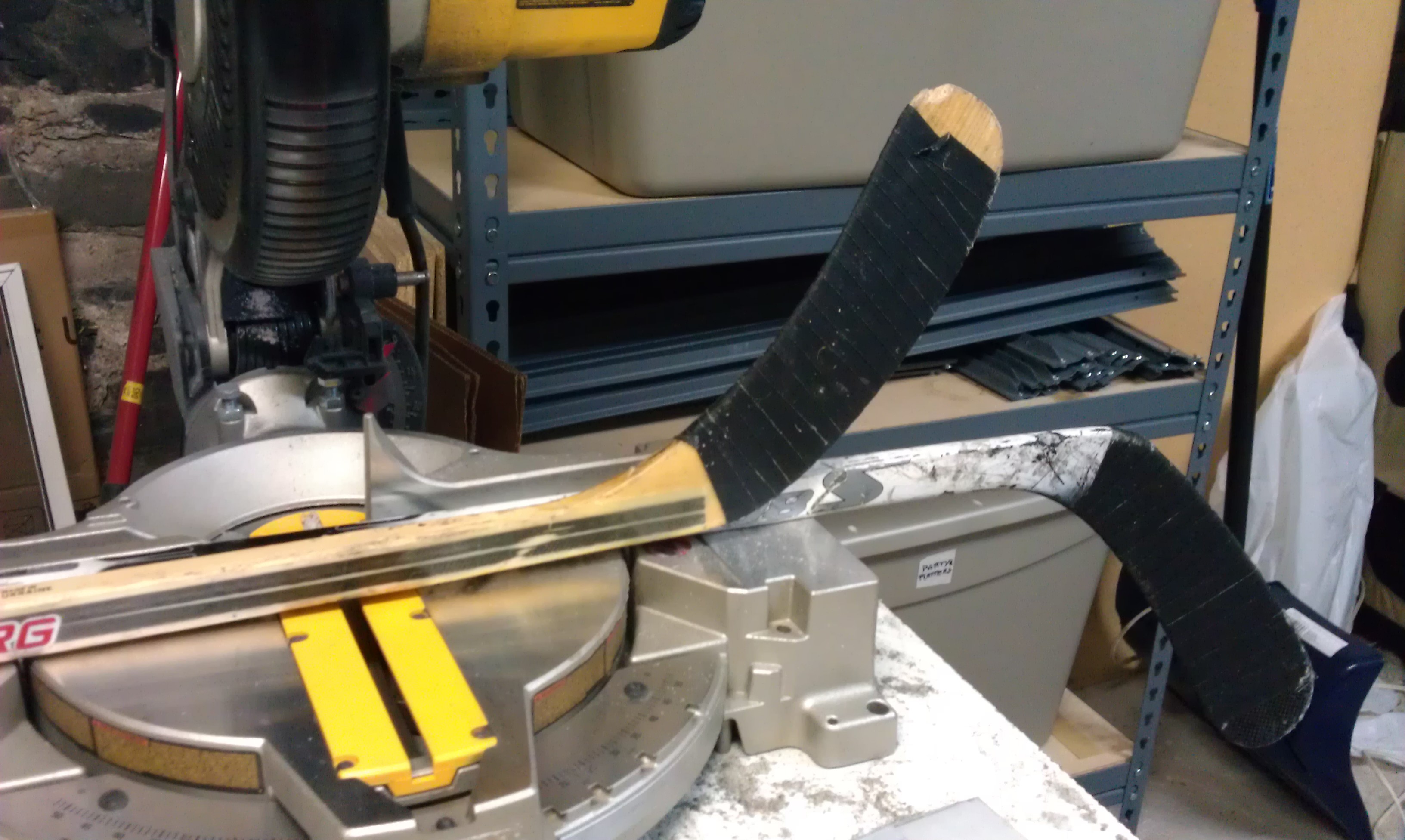
Batch cutting composites
Mitre Saw
The shaft of the stick must be placed firmly across the rail for its entire length when making the cut. Best for individual cuts and shorter pieces; less suitable for cutting large flat assembled surfaces.
Circular Saw
Produces the best, most even cut on assembled pieces. Know your saw's guide width and use it as a parameter setter for precise, repeatable cuts. Use a straight edge guide when needed.
Clamp a spare stick at the end of each of your cuts with the circular saw to prevent blowout (splintering at the exit point). This is especially important with composites, which can delaminate at the cut edge.
Pre-Assembly Prep
"Make sure you clamp all sticks together first before screwing in the cross beam attachment pieces... You'll notice that a lot of the spaces that naturally occur because the sticks aren't perfectly parallel should disappear. Do everything you can to avoid gaps."
Fastening
Composite Sticks
Because composite sticks are hollow, screw fastening requires extra care. The walls are thin carbon fiber layers that can crack or split if forced. Always drill pilot holes and don't over-tighten.
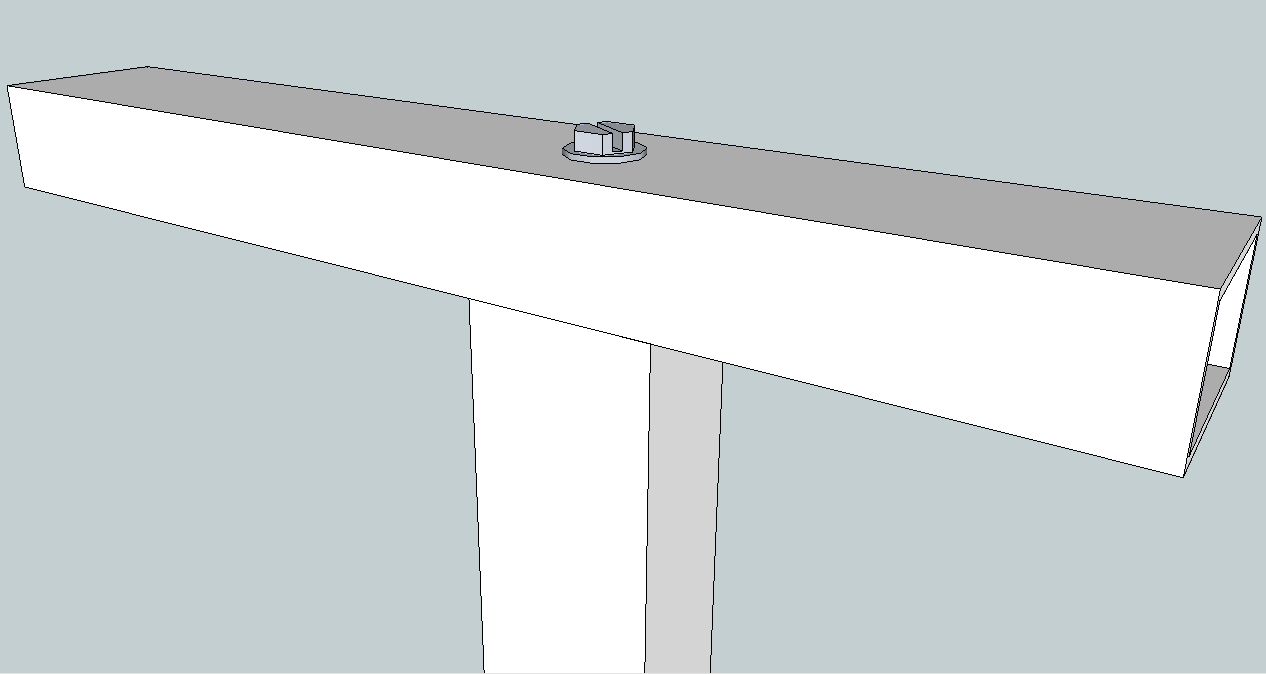
Composite joint (closed)
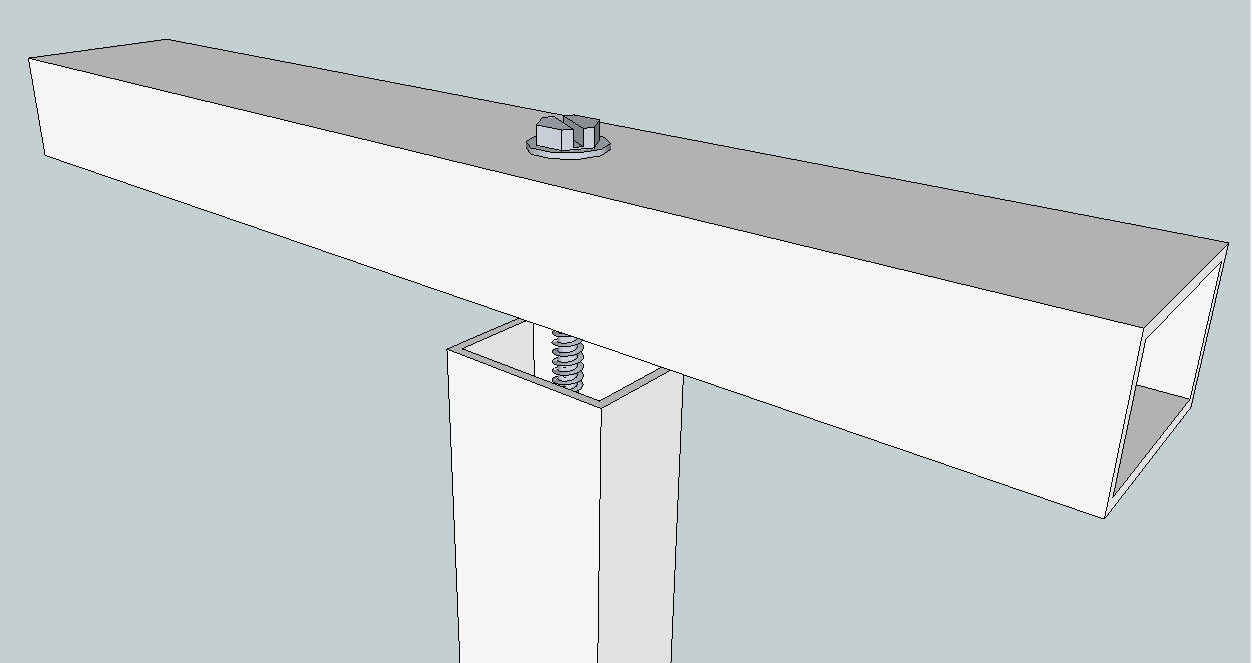
Composite joint (cross-section)
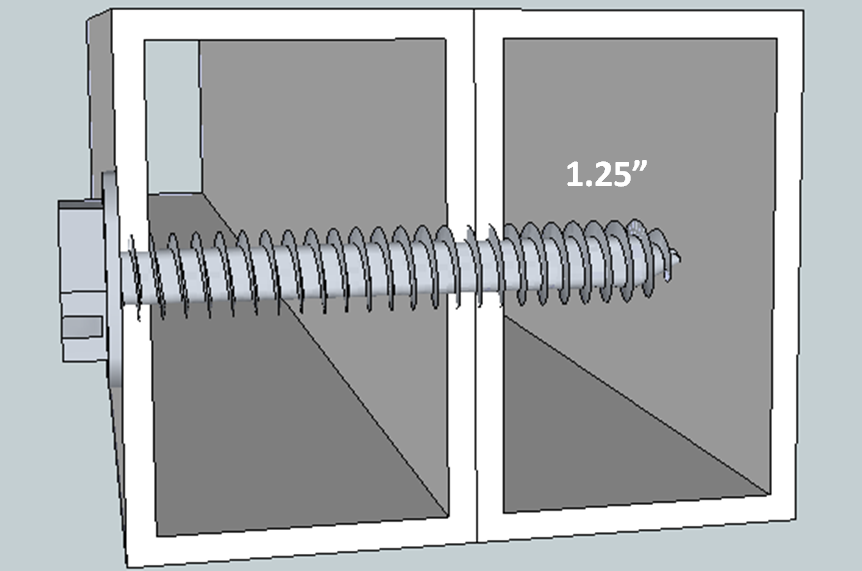
1.25″ screw in composite
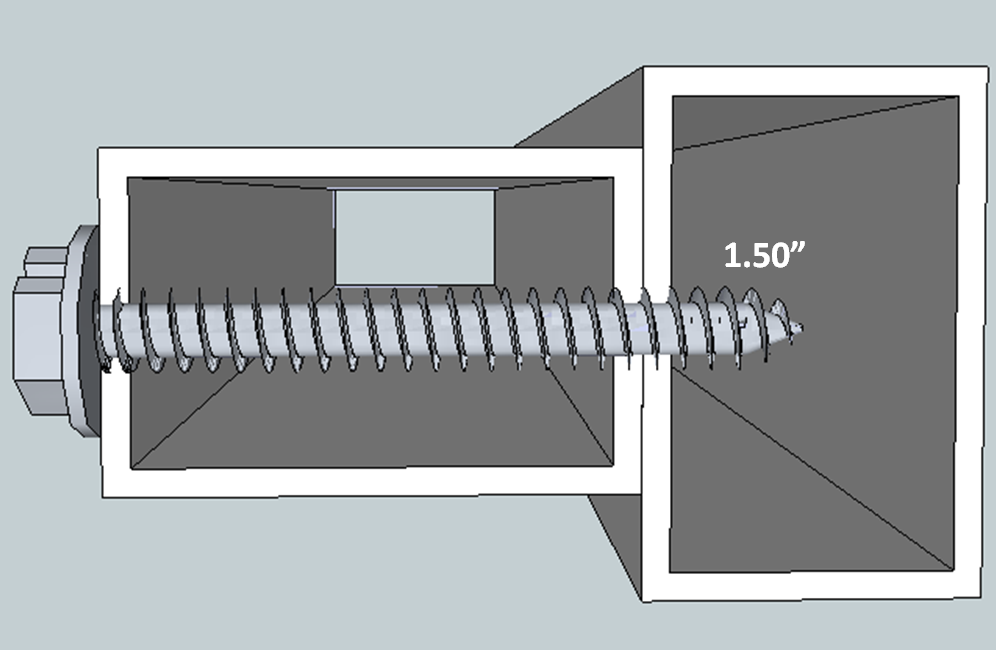
1.5″ screw in composite
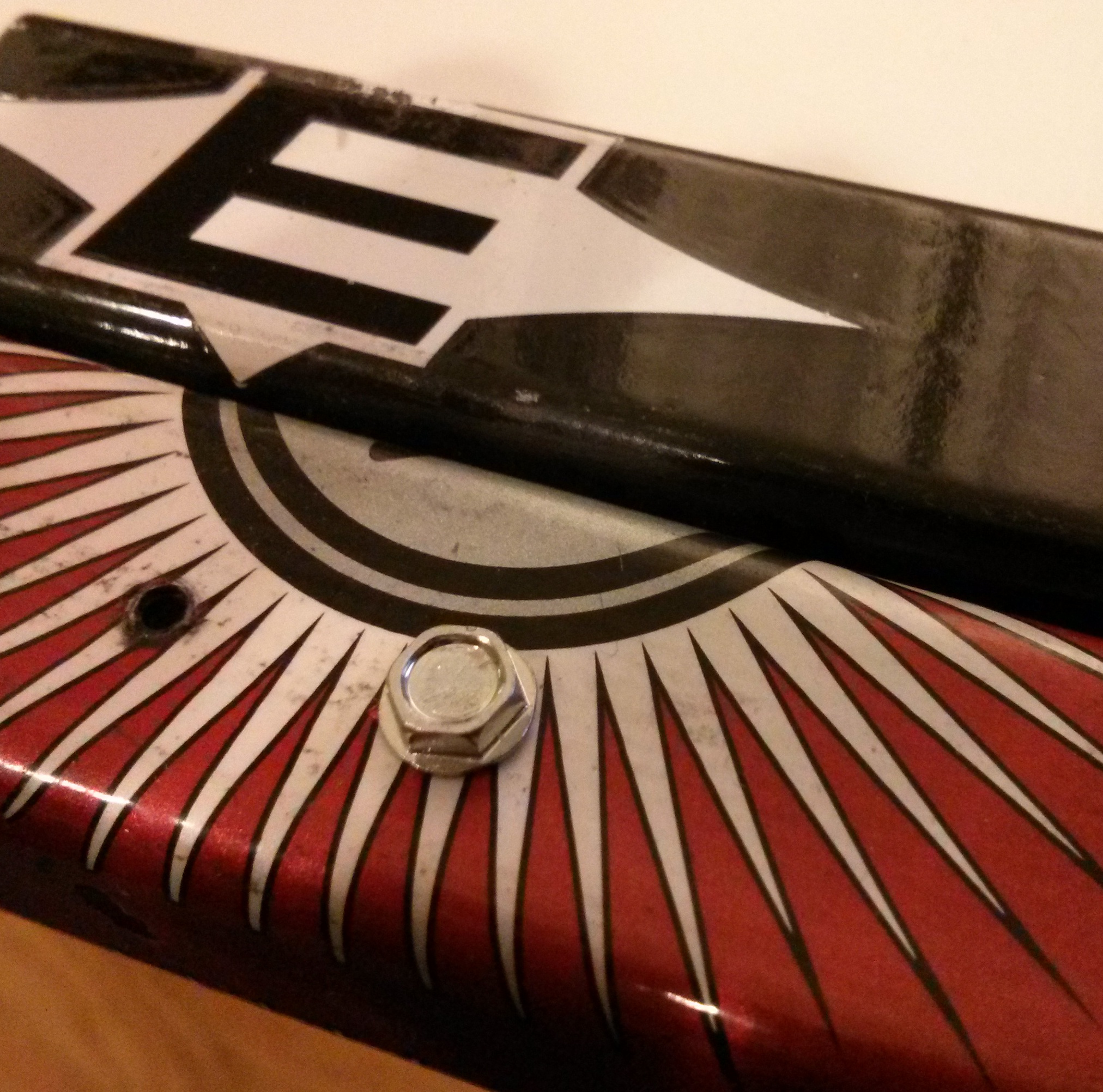
For heavy-duty composite joints, hex cap screws provide stronger holding power than standard wood screws.
Wood Sticks
Wood screws are the primary fastening method for wood stick furniture.
| Screw Size | Use Case |
|---|---|
| #4 | Clocks (lighter loads) |
| #6 | Standard furniture joints |
| #8 | Heavy-duty furniture joints |
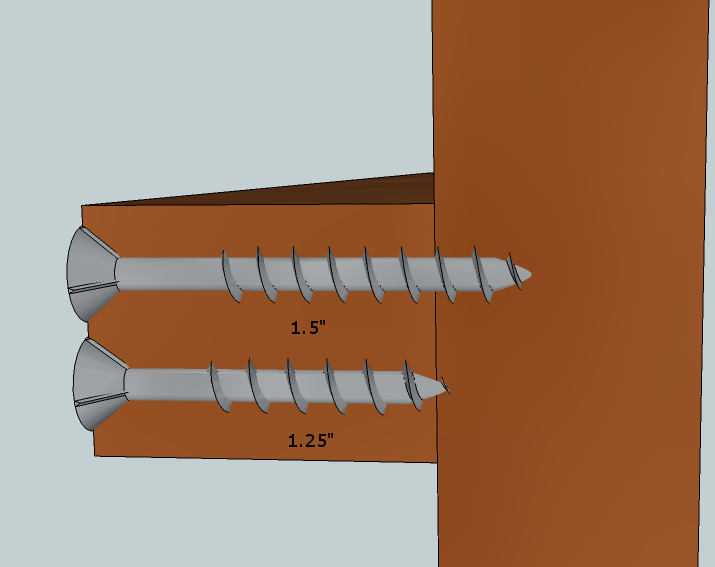
Screw Lengths
- 1.25″ — when drilling through the 3/4″ dimension (shorter orientation)
- 1.5″ — when drilling through the 1 5/32″ dimension (longer orientation)
Plan on a box of about 100 screws — some will get stripped or lost along the way.
Wood screws for hockey stick furniture
Countersinking (All Materials)
- Drill a pilot hole first to prevent splitting
- Countersink the top for flush seating using a countersink bit
- Drive the screw in firmly — but don't over-tighten, especially on composites
Always countersink your screw holes. Without countersinking, the screw head sits proud of the surface and creates an uneven finish. With countersinking, you get a clean, flush surface.
Dealing with Delamination
Delamination occurs when the carbon fiber layers separate — usually from excessive force, improper cutting, or stress during assembly. It's the most common failure mode with composite stick builds.
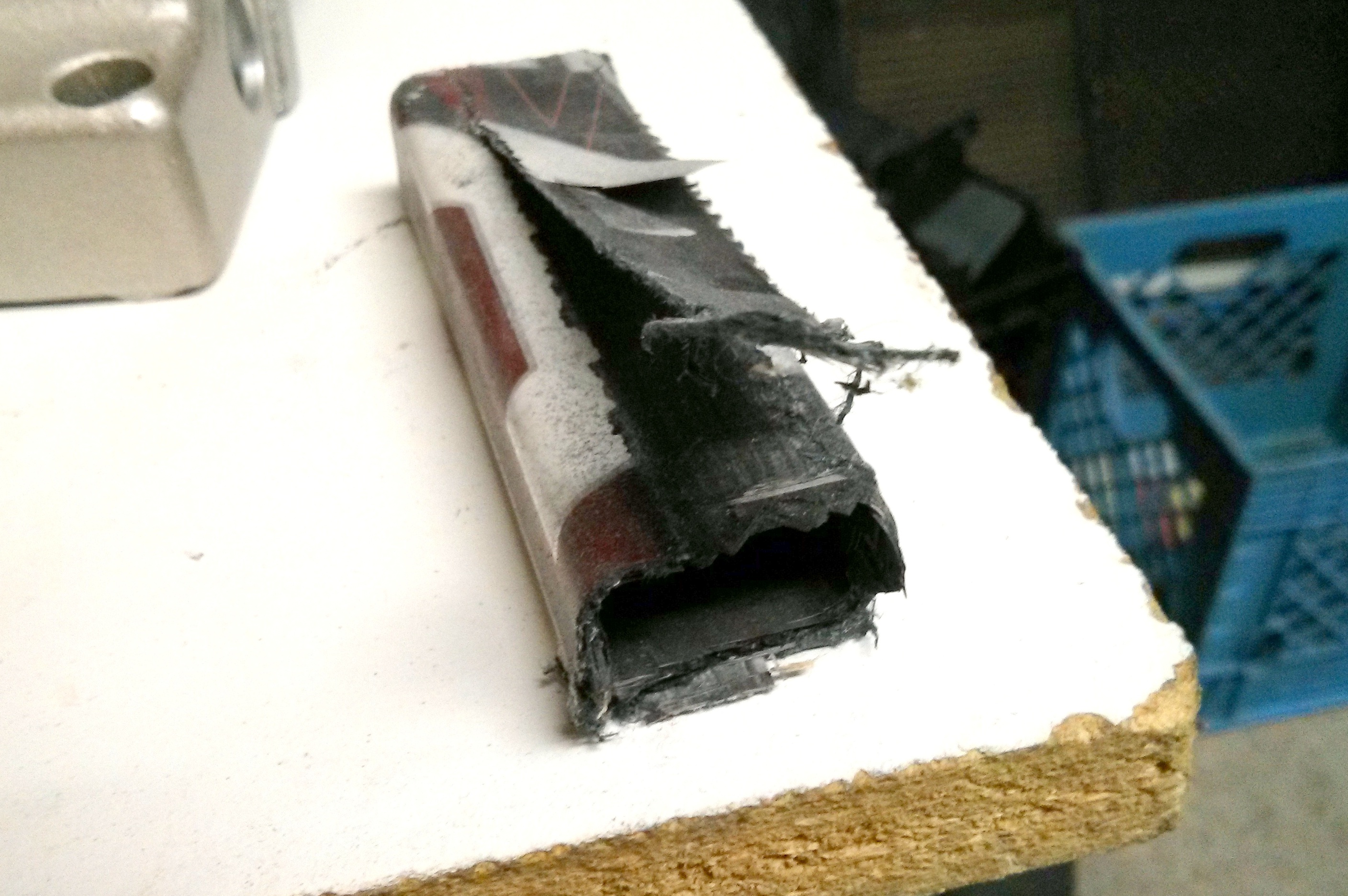
Delamination on a surface
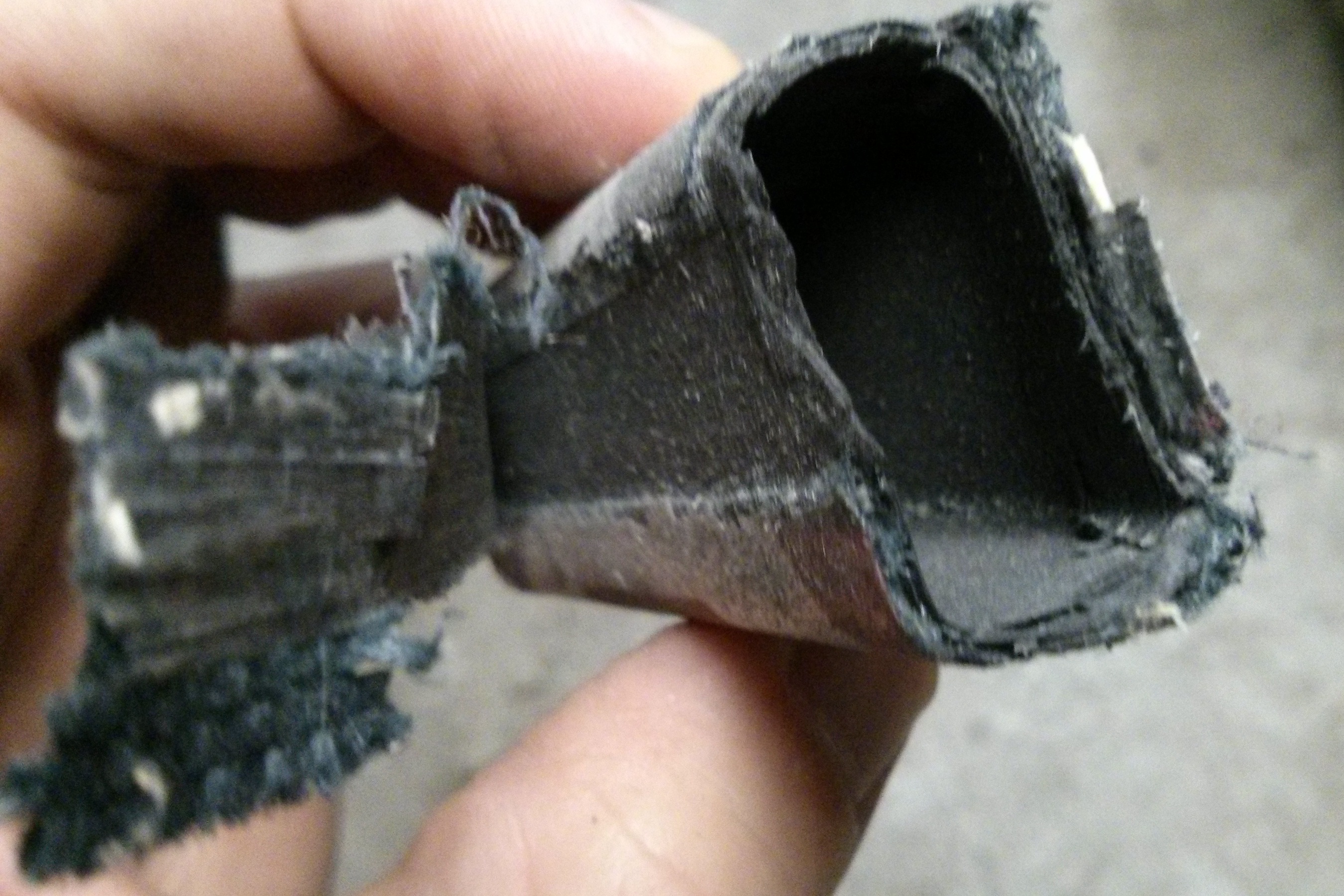
Close-up delamination
- Always drill pilot holes before screwing
- Don't over-tighten screws
- Use sharp blades for clean cuts
- Support the stick fully when cutting to prevent flexing
- Clamp a sacrificial stick at the exit point to prevent blowout
Wood sticks don't delaminate — they can split along the grain, but pilot holes and proper technique prevent this.
Framing Edges

Frame edges use 45-degree angle cuts to create clean mitered corners. Key tips:
- Use the exact same type of stick — same manufacturer and model — for all frame pieces
- Match aspect ratios carefully. "Even the same manufacturer, Bauer and Bauer... didn't guarantee it"
- Oversize your 45° cuts initially, then slowly work your way down in length until all four corners match up
"You can't test enough times!" Dry-fit all four corners before any glue or screws. Trim incrementally until perfect.
Clock Movements
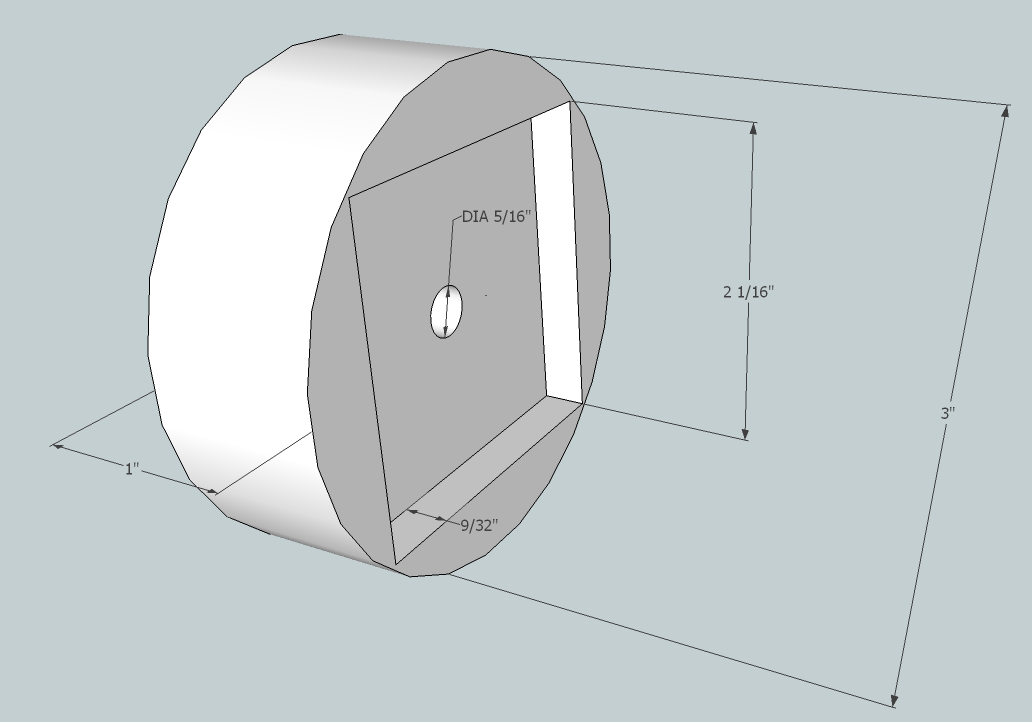
All clock projects on this site use the MVT7130 clock movement.
Shaft Specifications
Clock shaft lengths generally don't exceed 15/16″, so dial thicknesses can't be much more than 3/4″.
Puck Routing
| Spec | Value |
|---|---|
| Puck thickness | 1″ |
| Routing depth | 9/32″ |
| Purpose | Clearance for clock hands |
Vulcanized rubber is basically pulverized when being routed and forms a fine dust. Always wear a dust mask when routing pucks.
If there is a slope or unevenness of the inner plane relative to the face of the puck, the movement shaft might not fit. Take your time for a flat, even routing surface.
Hand Sizing
The minute hand should extend to just about the edge of the dial face but not exceed it. A good rule: the minute hand length should be about 2/3 the radius of the dial.
Hand clearance is not an issue when using sticks as the dials — sticks are thinner than pucks.