
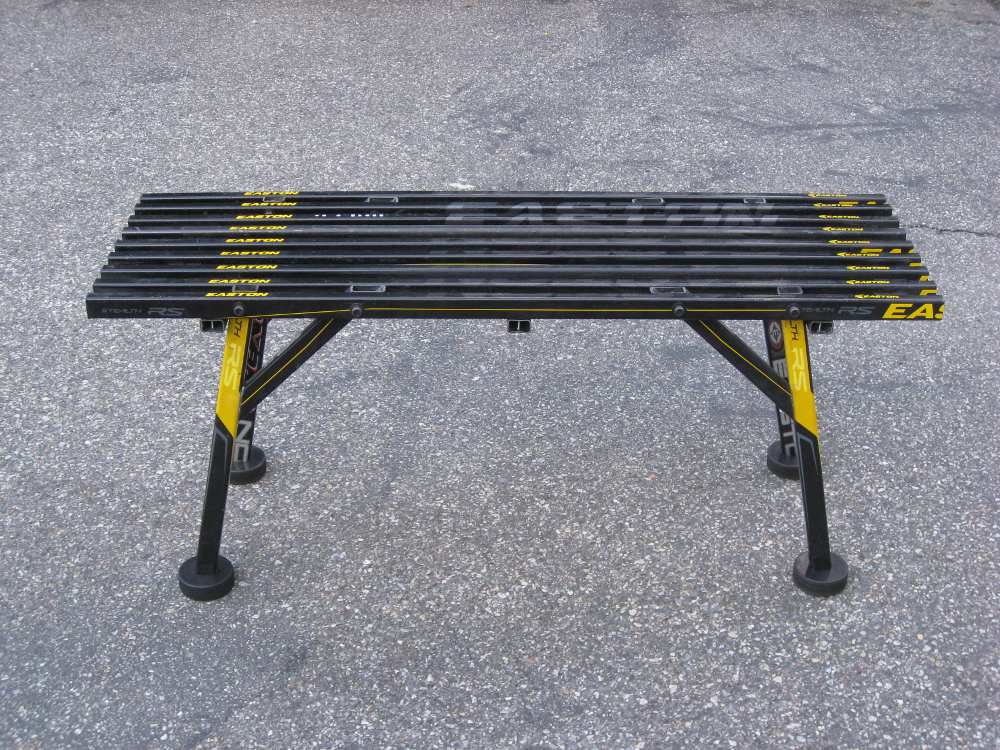
Hockey Stick Bench
Build a sturdy bench from 14 hockey sticks. A great beginner project with detailed step-by-step instructions and puck feet.
Before you start: Read the Building Guide for essential safety and technique information.
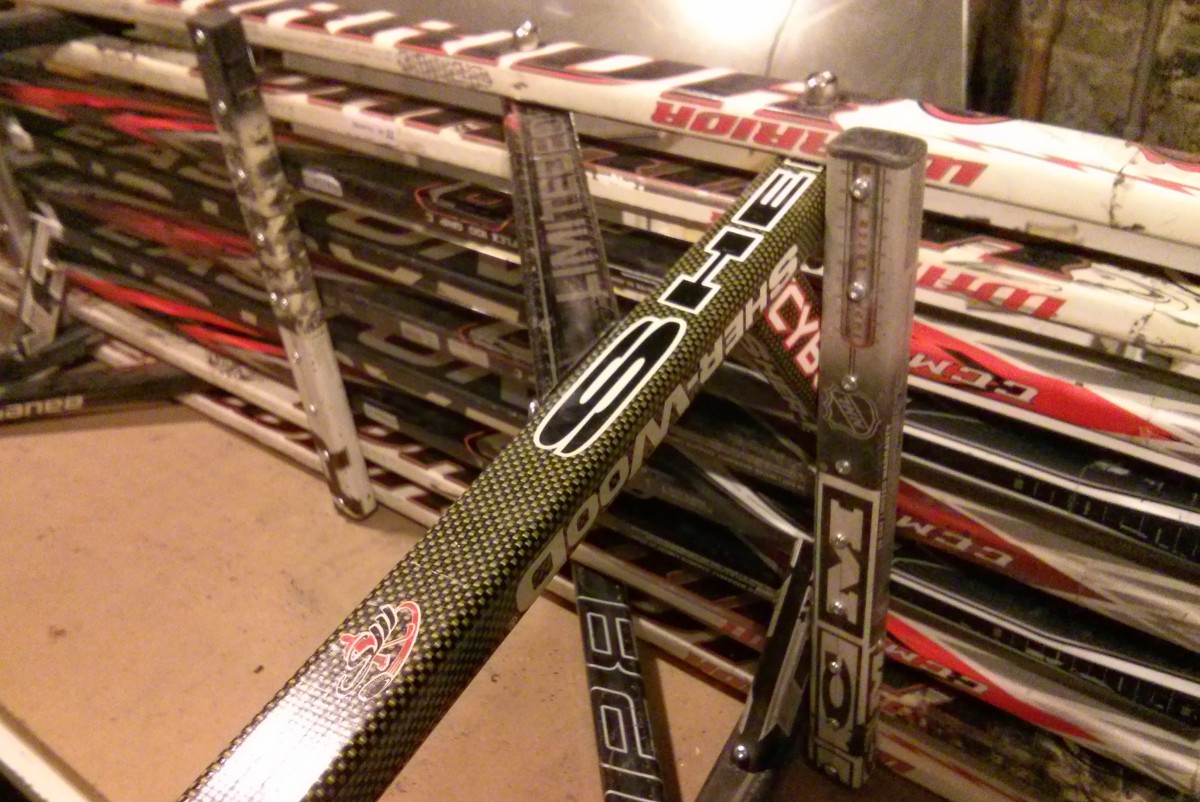
Great for lacing shoes or skates! The hockey stick bench is a great piece of fully functional furniture that doesn’t require a lot of sticks. Composite sticks are really strong so even if you space them out, they make a good seat.
Unlike many hockey stick benches which bolt to wooden or plastic frames, this design uses sticks for the legs and pucks for the feet, adding an extra “cool” factor. Though the legs are at an angle here, the design can be easily modified for perpendicular legs for a simpler build.
Design Breakdown
- Seat — 9 sticks at 41.5″ with 3 cross-beam attachment pieces
- Legs & Leg Supports — angled legs with two support pieces each
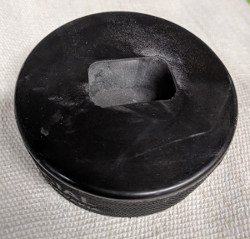
- Puck Feet — routed pucks that compression-fit onto the leg ends
Seat
The first order of business is the seat. You’ll want to use only those sticks that are greater than 41.5″ in length. Don’t try to glue or attach broken sticks together to try to get the length right — it’s for a bench, so you don’t want to sit down and have the seat break!
Steps:
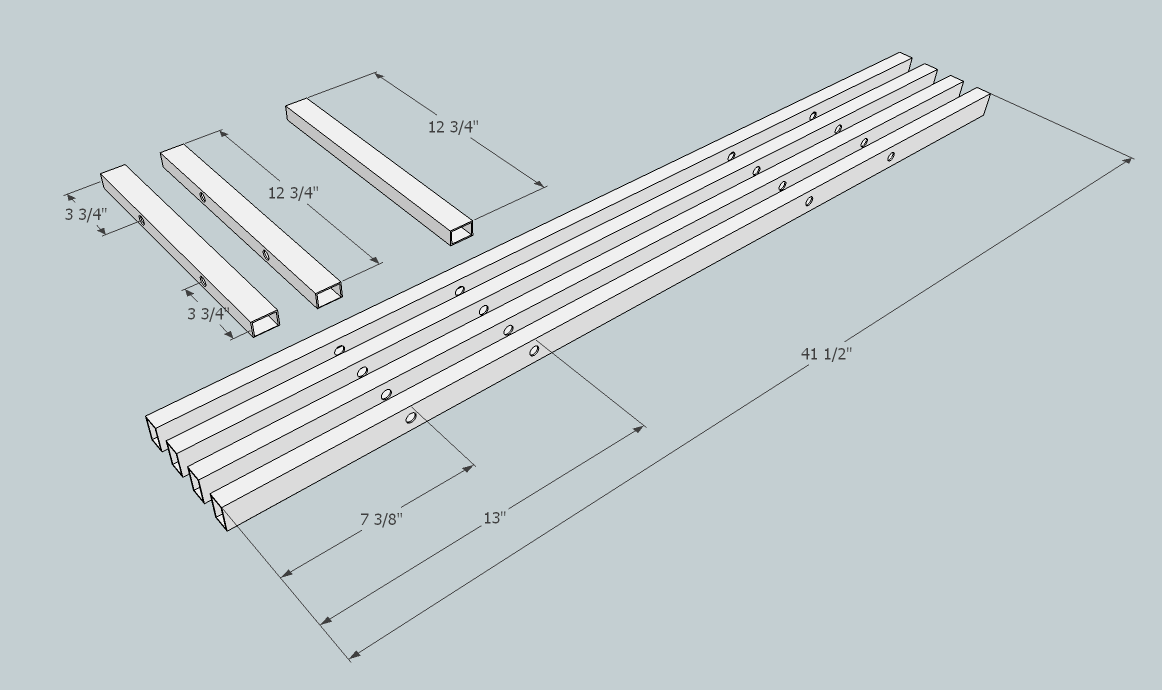
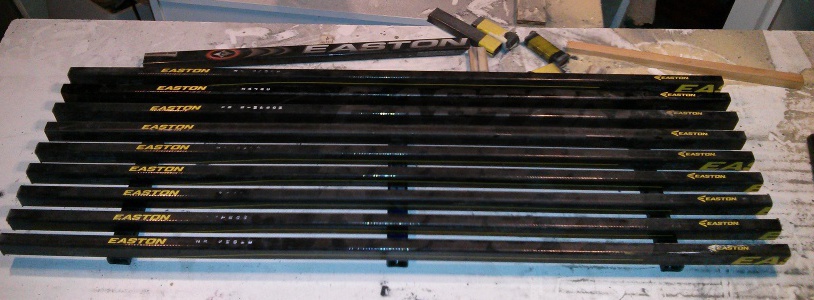
- Cut nine sticks to 41.5″ length
- Cut three seat attachment pieces to 12.75″ in length; in two of them, drill holes of about 7/32″ diameter, 3.75″ from either end — drill clean through the stick
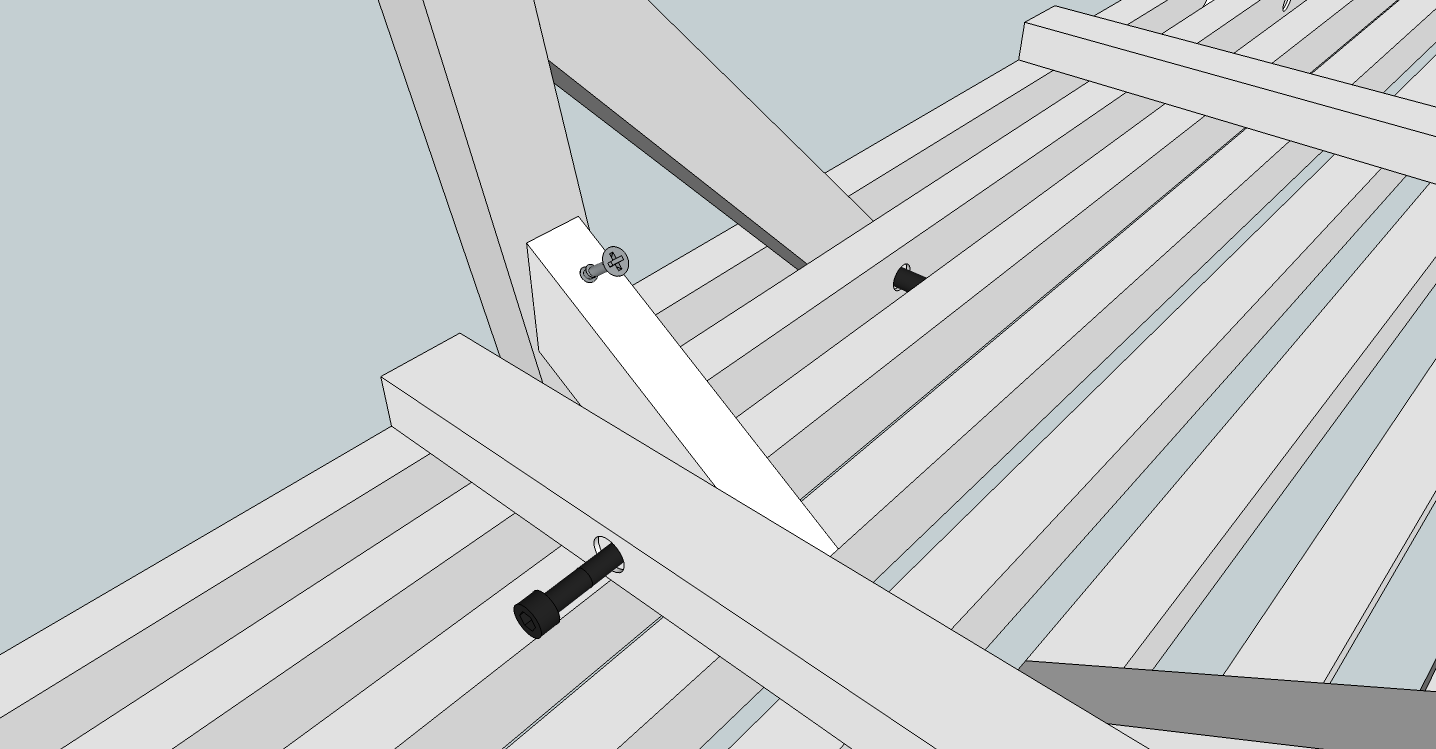
- Choose four of the nine seat slat sticks and drill 3/8″ holes in the locations shown in the model
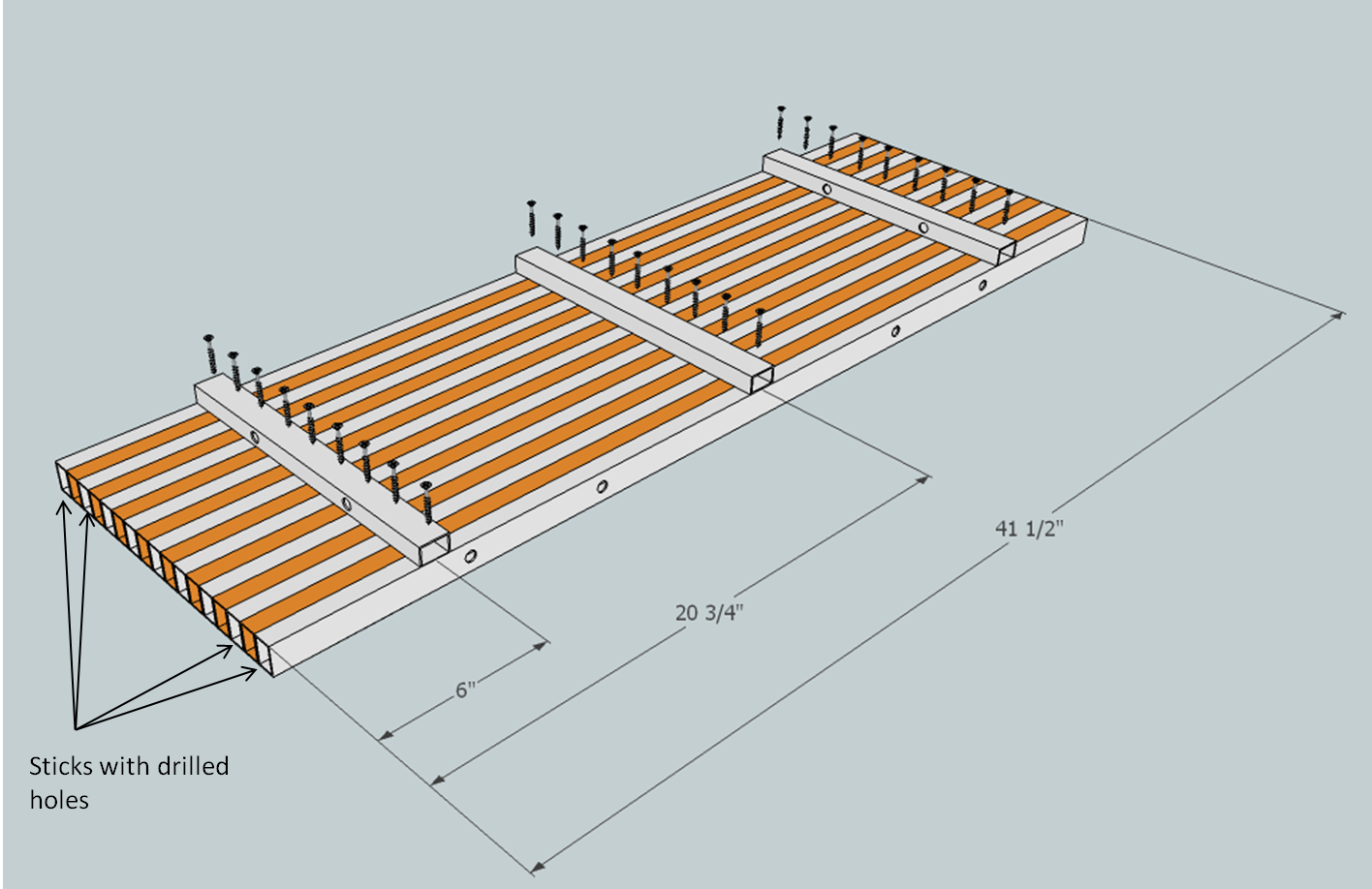
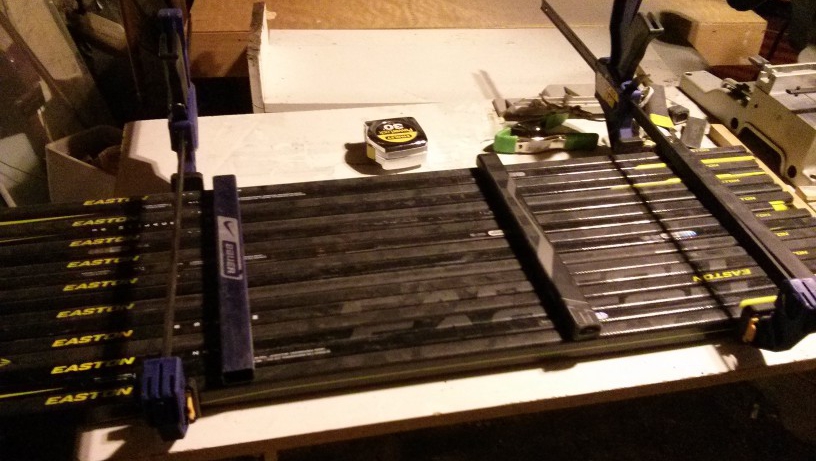
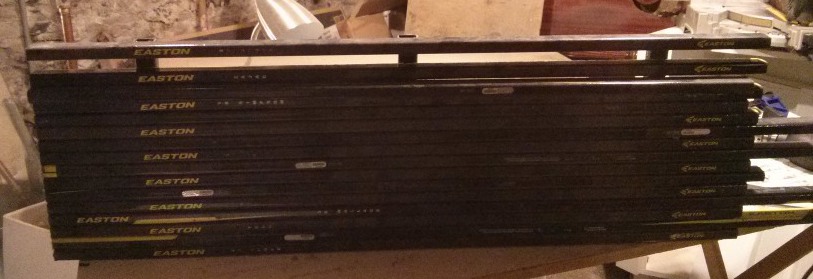
- Using spare sticks as spacers, clamp all nine of the 41.5″ sticks together where two of the sticks with holes should be on both outer edges — the spare sticks help hold everything together and keep the spaces uniform for a good look
- Secure the seat attachment pieces on the bottom of each stick using #6, 1.25″ sheet metal screws, ensuring the two attachment pieces with holes are on the outside
- For the #6 screws, drill a pilot hole with a 7/64″ bit to make driving the screws much easier
- Remove the spare sticks — and you’ve got a bench seat!
Legs and Leg Supports
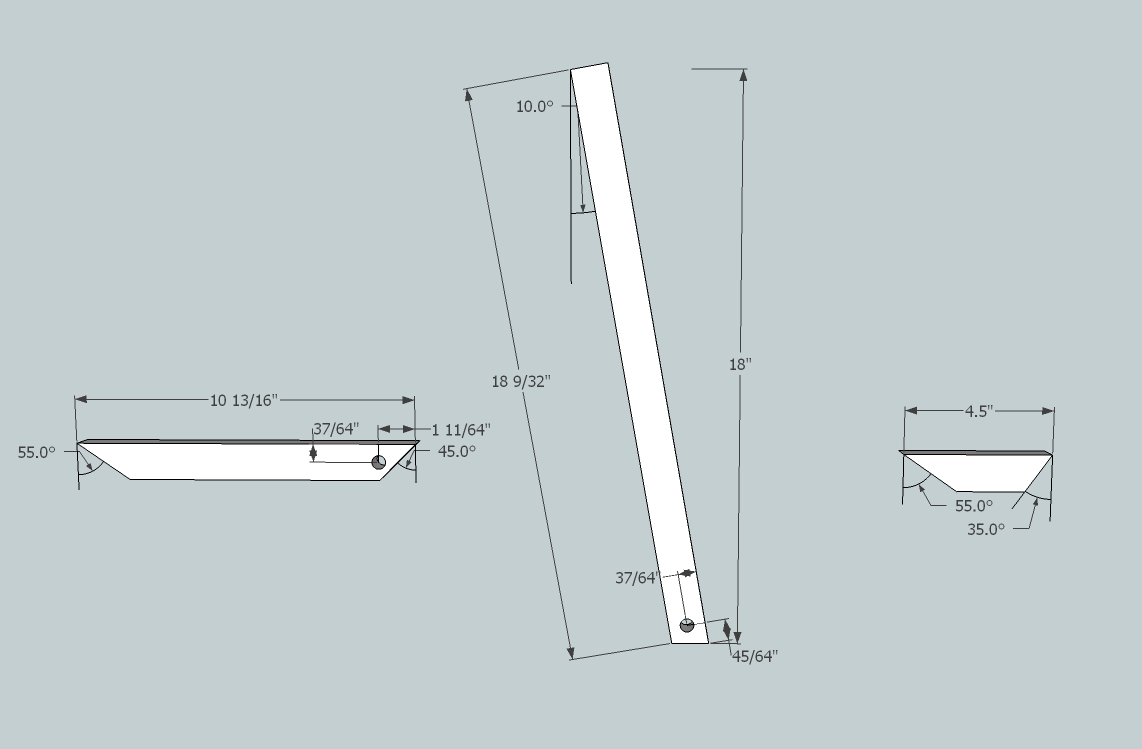
Next we’ll add the legs and the leg support pieces. The three pieces for a single leg are: an approx 18″ leg, a 10 13/16″ support piece, and a small 4.5″ support piece. You’ll have to make four of all three pieces.
NOTE: If you’re not going to use puck feet, make sure both ends of the legs are cut parallel to each other so the bench sits flat — both ends need a 10 degree mitre cut.
Cutting the Angles
You might find it tricky to cut the 55° angles using a mitre saw since their range can be limited to 45° or 50°. Options:
- (Dangerous) Set the mitre to 35° and put the stick perpendicular to the guide rail
- (Much safer) Build a guide/jig to hold the piece while doing a more shallow mitre cut
Attaching the Legs
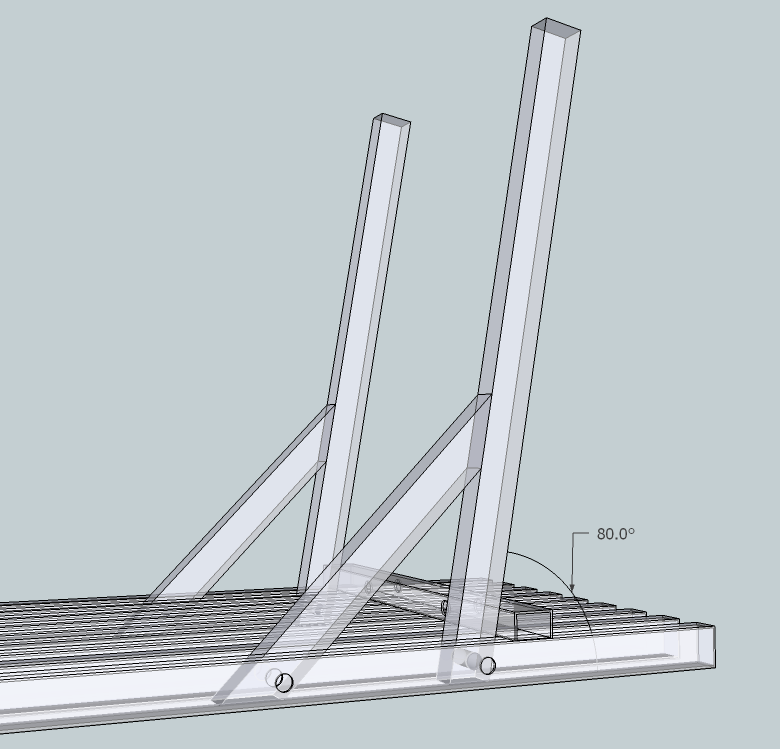
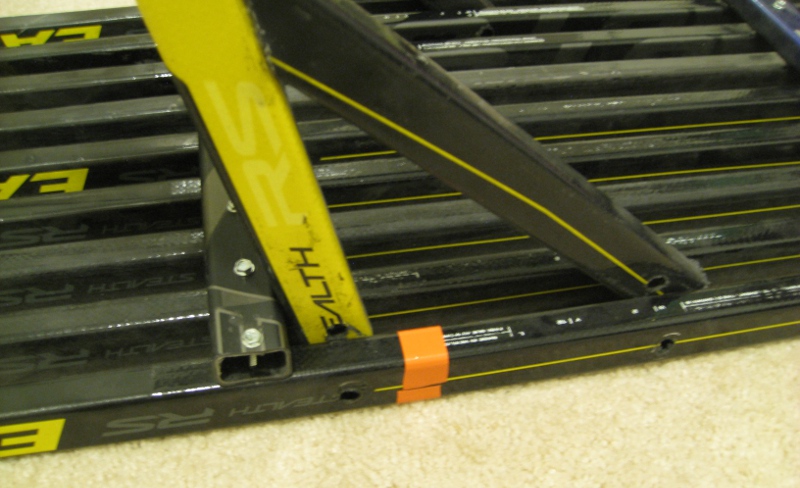
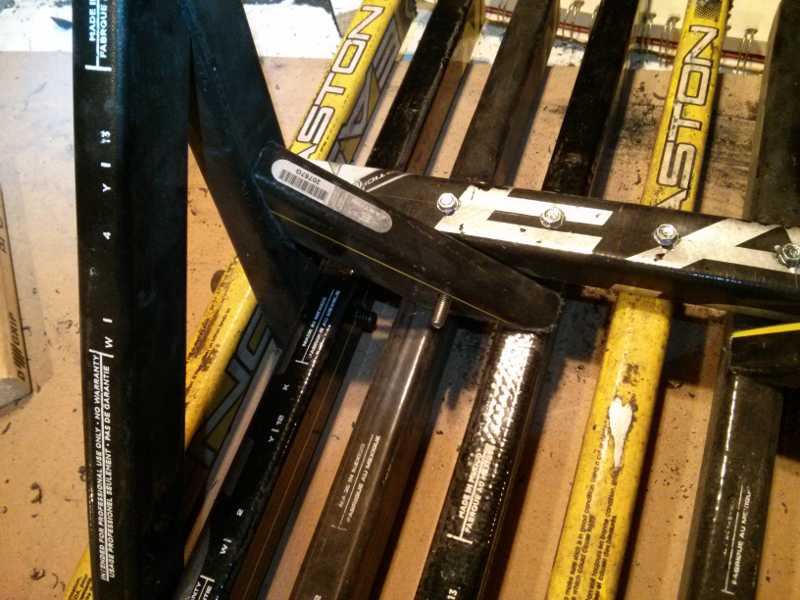
- Take the main leg and the longer support piece and insert them between the first two bench slats
- The leg face with the 10° angle cut should face down on the bench so the leg angles outward
- The support piece should have the 45° cut face down between the bench slats, putting the 55° cut against the leg
- Using two 5/16″-18 shoulder bolts (2.75″), bolt the legs and support pieces to the bench — be sure to use a washer behind both the bolt head and the nut
- Drill a #6 1.5″ sheet metal screw and a #6 1.25″ sheet metal screw from the support piece into the leg — the 1.5″ screw should be on the inside since it has further to travel
- Repeat for all four legs
Small Support Pieces
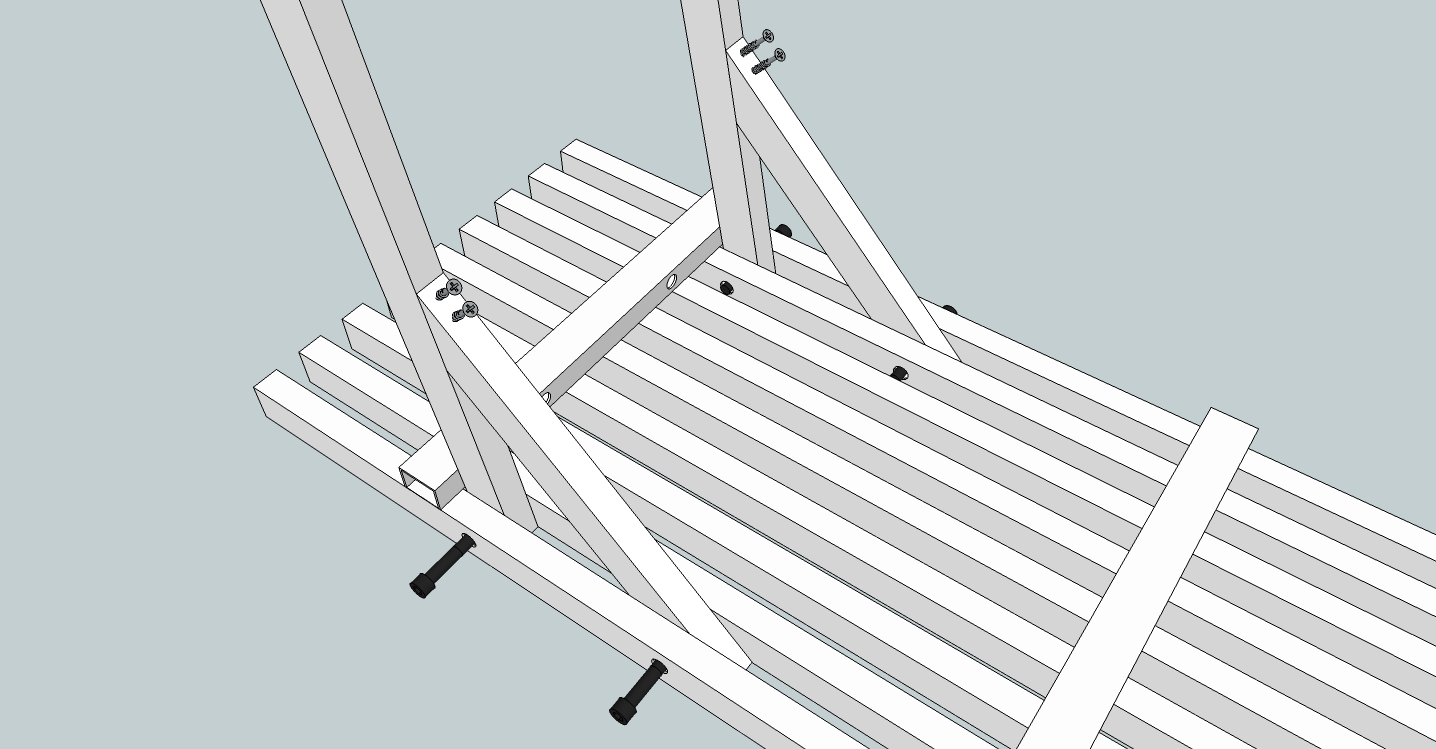
We waited to attach the small support pieces because of high variance in exact hole locations from seat construction.
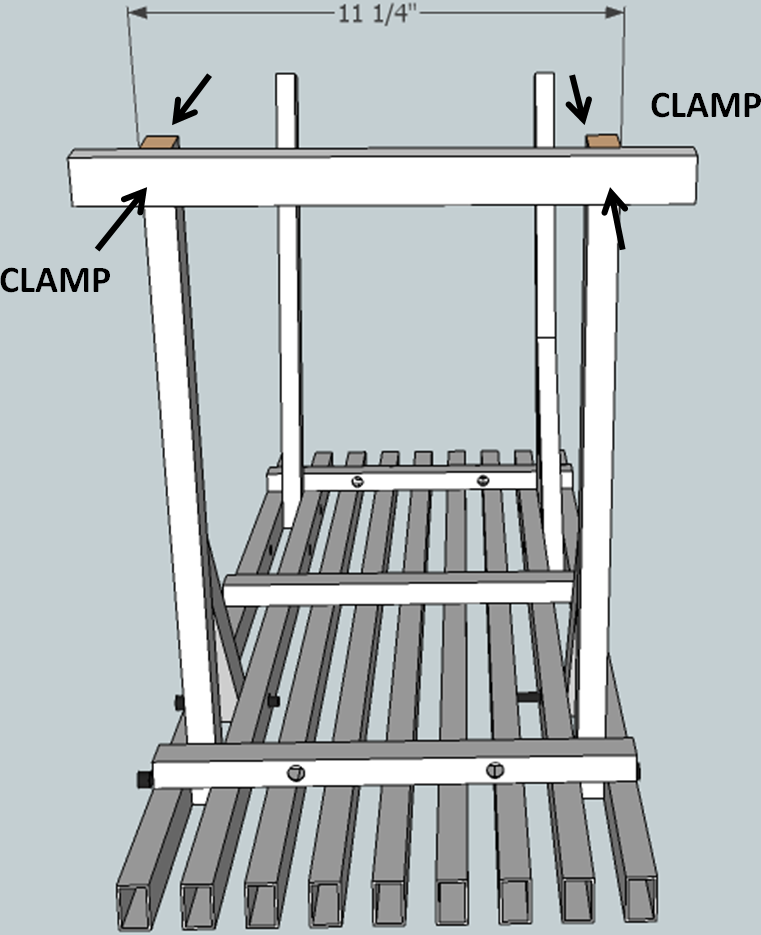
- Measure the distance between legs on a short side at the seat — approximately 11.25″
- Clamp a temporary brace between the same two legs near the feet, matching that distance — this ensures your legs will be vertical
- Slide the small support pieces into position (55° face down on slats, 35° face on legs)
- Using a 7/32″ drill bit, slide it through the seat attachment piece holes and twist it, marking the small support piece with a divot
- Remove the pieces, drill through them at each divot with the 7/32″ bit
- Return pieces to bench, run #10-32 bolts through both pieces and seat attachment pieces — use washers on both head and nut
- Hold each support piece in place and drill in a #6 1.25″ sheet metal screw
Reinforcement
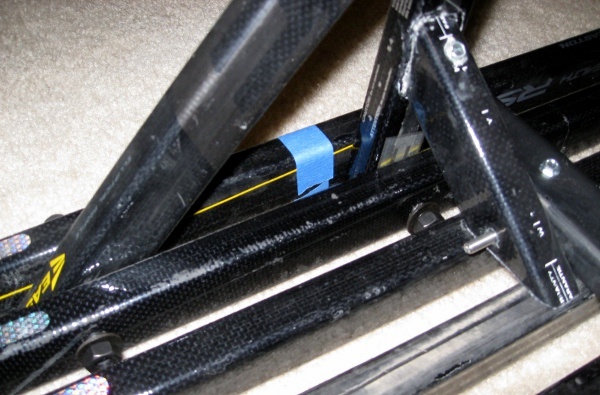
Fill any gaps between the leg support pieces and legs using high-strength epoxy. A general purpose epoxy will do for an indoor bench — the longer the cure time, generally the stronger the bond.
Optional: Add mending plates to the leg/support junction for extra insurance. If plates come with screws, skip them and use 1/2″ length #6 or #8 torx or socket cap screws instead — they hold much better.
Puck Feet
Puck feet add a great final touch. You’ll need a router or end mill.
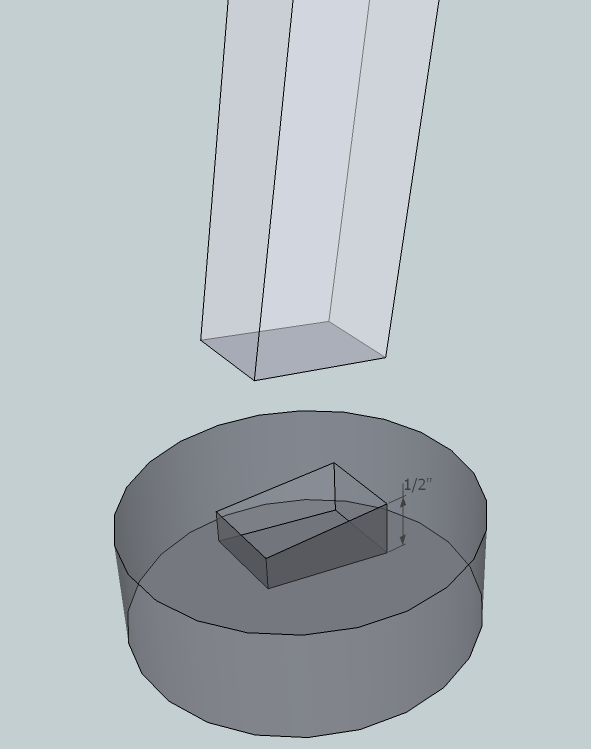
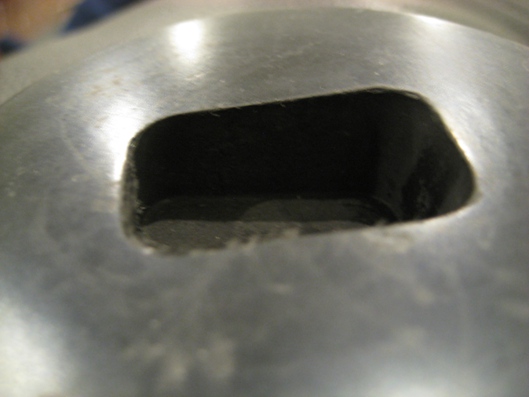
- Remove puck material about 1/2″ down on the inside where the longer portion of the stick inserts
- Measure each leg’s cross-section dimensions (~1-3/16″ × 0.75″) and undersize the hole in the puck by about 1/32″ — this allows the stick to compression fit into the puck
- Different brand pucks have different durometers, so trial and error is needed
- If the hole is accidentally too large, epoxy the stick into the puck
- Push on all four puck feet — and you have your bench!
Even if you’re not perfect, some glue can cover your tracks!
For a full 3D model of the bench, visit the Models page.
Gallery (18 photos)
Related Projects
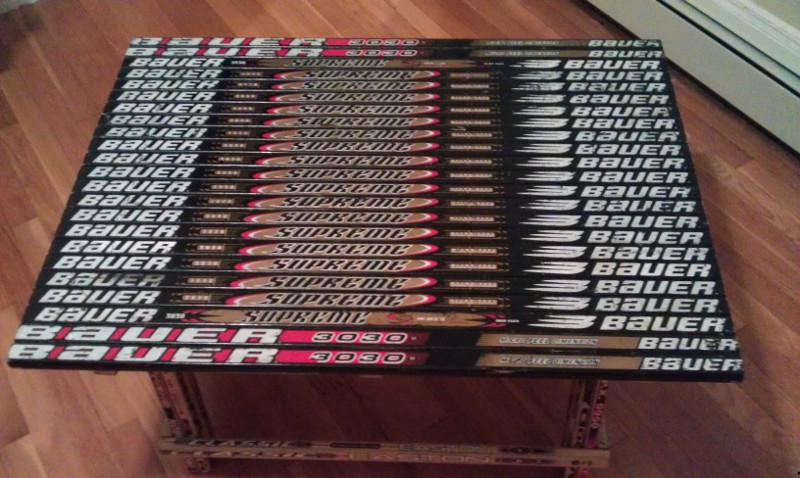
Hockey Stick Coffee Table
The tried and true of hockey stick furniture. Everything at right angles and a great place to start if you're new to building. Uses ~40 sticks.
 Preview
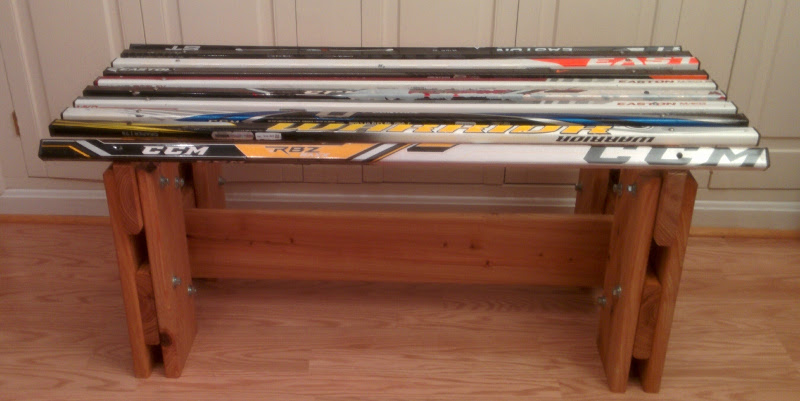
 Outdoor Bench
A hockey stick bench designed for outdoor use. Weather-resistant construction for patios and rinks.
 Preview
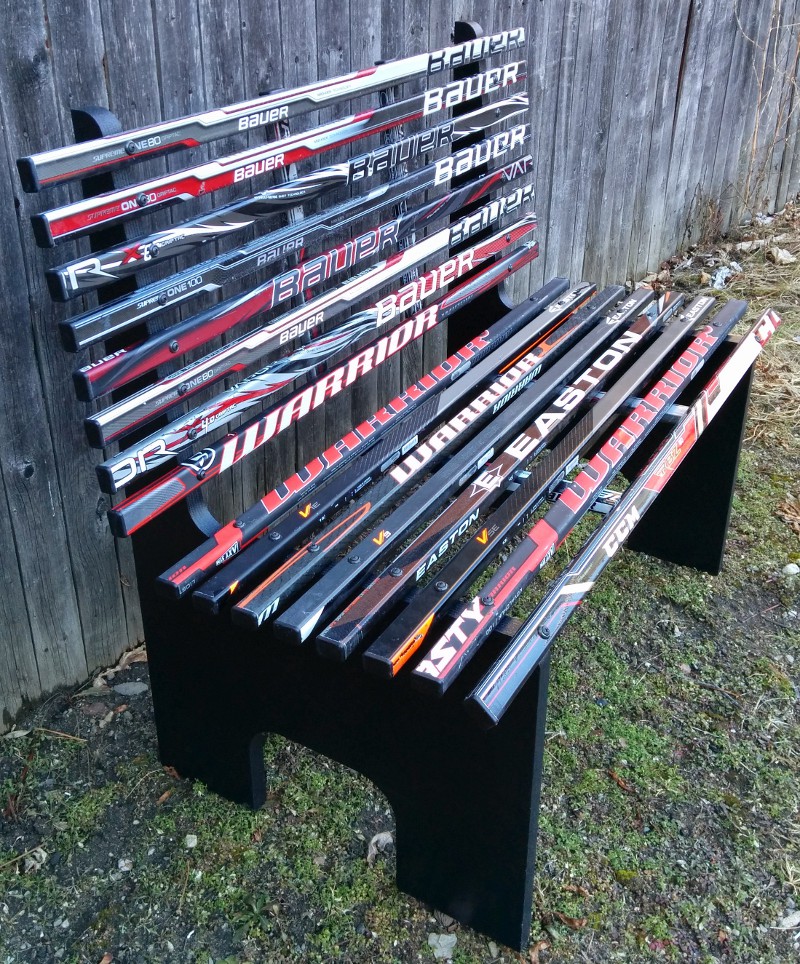
 Bench with Back
An upgraded hockey stick bench featuring a full backrest. Multiple design variations shown.